Fatekeeper Is a Gorgeous First-Person Fantasy Scrapper With Real Bite
This compact early access RPG swings hard with weighty melee, inventive physics, and striking dark fantasy vistas, even if its rough edges are currently as visible as its ruined stonework.
Early Access Review
last updated Jun 03, 2026
Fatekeeper is rough-hewn, beautiful, and full of promise.
A Dark Fantasy Road Less Guided
Fatekeeper drops you into a handcrafted world that clearly wants discovery to matter, and that old-school sensibility gives its opening hours a distinct identity. The game resists modern hand-holding, letting environments, levers, pathways, and visual cues do most of the heavy lifting, which makes exploration feel more tactile than checklist-driven. There is a strong semi-linear adventure rhythm here, one that recalls older action RPGs and immersive fantasy games without simply becoming a museum exhibit for nostalgia. Even in its current early access state, the world has atmosphere to spare, with mountain paths, ruined halls, dark chambers, and scattered remnants of catastrophe doing a lot of narrative work through scenery alone. It is still a very short slice right now, but what is here feels like the foundation of a real place rather than a content conveyor belt in a wizard hat.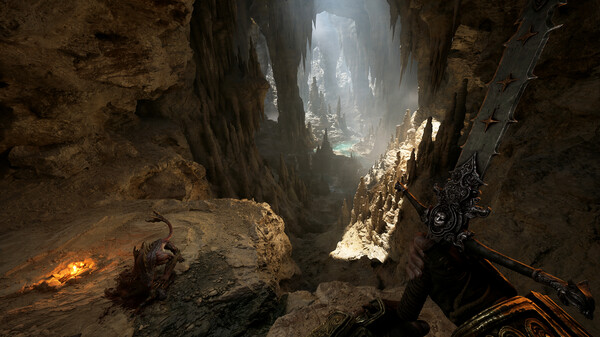
Steel, Spells, and the Joy of Fighting Dirty
The combat is where Fatekeeper most obviously earns its attention, because its first-person melee has a heavy, deliberate style that makes every swing feel committed. Weapons carry satisfying heft, dismemberment adds a grimly entertaining edge, and the best encounters encourage using the environment as much as your blade, whether that means spikes, ledges, fire, or telekinetically repositioning some poor fool into a bad life decision. Magic integrates nicely with melee in concept, especially telekinesis and utility-focused abilities, and that blend gives battles a scrappy improvisational energy when the systems click. At the same time, there is still some noticeable clunk in responsiveness, hit feedback, enemy reach, and attack readability, with certain weapons and spells feeling underpowered or less reliable than others. Boss fights and ranged encounters are also where the current balance wobbles hardest, occasionally crossing the line from demanding to needlessly punishing, like the game mistook friction for sophistication.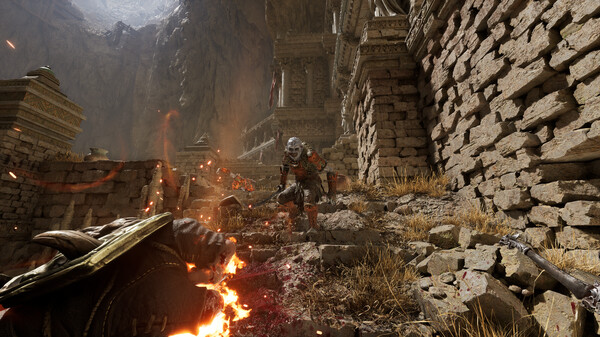
A Big Skill Tree With Room to Grow Into Itself
Progression is ambitious, even if early access currently limits how much of it you can meaningfully explore. The skill tree is large and immediately suggests a lot of build variety, which is exciting for a game at this price point, but much of the available advancement right now is rooted in modest stat boosts rather than transformative perks. That means the promise of specialization often feels a little ahead of the actual playable slice, especially for magic-focused or dagger-focused approaches that seem built for a fuller game than the current version can support. Loot has some personality, and the RPG scaffolding around relics, alchemy, and weapon choices hints at broader systems waiting to be fleshed out. As a foundation, though, it works, and for a small team that matters more than having every branch of the design fully bloomed on day one.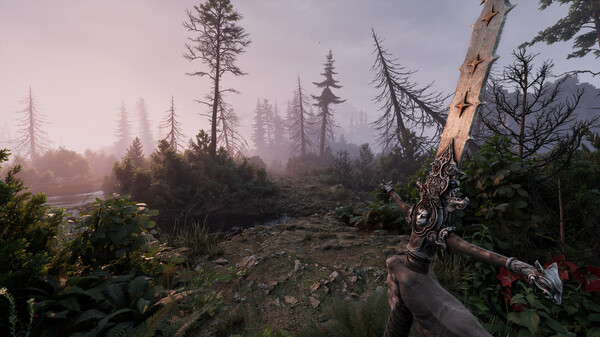
Beauty on the Brink
Visually, Fatekeeper is the kind of game that makes you stop moving just to stare at the scenery for a second, which is dangerous in a game where something may be trying to cave your skull in. Outdoor vistas are consistently impressive, interiors are richly textured, and the overall presentation has that rare combination of high fidelity and strong fantasy mood rather than feeling like a sterile tech showcase with a sword glued onto it. Character models, lighting, and environmental detail all sell the world well, even if some darker areas can be a little too murky and a few visual quirks in lighting or settings remind you this is still early access. Performance is generally solid for many setups, and there is a lot of praise to be given for how well it can run considering how good it looks. That said, optimization is not universally smooth yet, with reports of stuttering, VRAM pressure, unstable frame pacing on some machines, and limited graphics granularity making the performance picture more uneven than the vistas themselves.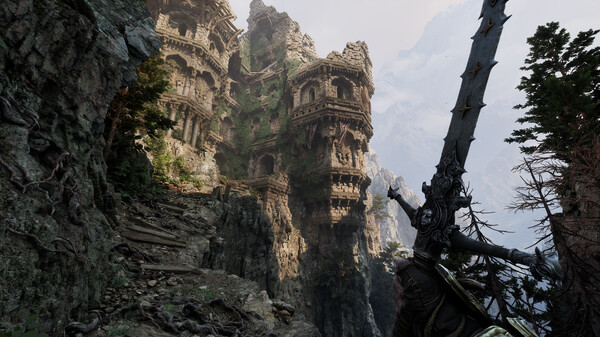
When the World Sounds Right, and When It Doesn’t
Fatekeeper’s audio has the right instincts for this kind of dark fantasy journey, especially in its music, which often gives the world a moody, almost classic action-RPG flavor. The soundtrack helps sell the sense of wandering through a place haunted by collapse, and when it lines up with exploration, the atmosphere genuinely lands. Sound effects in combat can also reinforce the physicality of its melee, but this is one area where the early access label is impossible to ignore. Missing sounds, inconsistent audio levels, weak mixing in some scenes, and a lack of impact in certain interactions keep the presentation from feeling as cohesive as the visuals. There are moments when Fatekeeper sounds evocative and brooding, and others when it sounds like a few layers of the world forgot to clock in for their shift.
The Rough Edges You Feel in Your Hands
The most persistent issue running through Fatekeeper right now is not a lack of vision, but friction in the way that vision is delivered through controls and usability. Keyboard bindings are awkward out of the box, some actions feel unintuitive in the heat of combat, and the absence of native controller support is a major gap for a first-person action RPG that practically begs to be played from the couch with a blanket and misplaced confidence. Quality-of-life features also feel early, from limited settings flexibility to inventory and interface elements that could use a cleaner, more readable pass. Healing, saving, and encounter recovery can be harsher than they need to be, especially when paired with difficult fights and longish retries. None of this feels unsalvageable, but it does make the current build feel more like a highly promising work in progress than a fully comfortable one.
EARLY ACCESS RATING
Developer
Paraglacial
Publisher
THQ Nordic
Early Accesss Release Date
June 02, 2026
Verdict & Summary
Fatekeeper already has the hardest part figured out: it has a compelling identity. Beneath the rough balancing, the awkward controls, the uneven audio polish, and the still-maturing combat feedback is a genuinely exciting first-person fantasy RPG with striking visuals, clever environmental combat, and a world that feels built with care rather than committee notes. It is undeniably short in its current form, and some encounters push challenge into frustration, but the foundation here is strong enough to make those issues feel temporary instead of fatal. For a small team, this is an impressively confident start, and one that deserves attention not because it is finished, but because it is aiming at something specific and already getting a surprising amount right. Fatekeeper is rough-hewn, beautiful, and full of promise, like an enchanted sword that still needs a bit more time on the grindstone.