The Mound: Omen of Cthulhu Turns Jungle Panic Into Its Best Feature
This Lovecraftian co-op extraction horror game delivers a brilliantly unnerving madness system, strong atmosphere, and unforgettable group chaos, even if clunky combat, shaky performance, and a few rough systems keep it from fully claiming the treasure.
last updated Jul 27, 2026
Its madness mechanics are smart, immersive, and frequently brilliant.
Madness in the Underbrush
The Mound: Omen of Cthulhu immediately distinguishes itself with a genuinely clever take on co-op horror. Rather than relying on cheap jump scares, it builds tension through confusion, paranoia, and the creeping sense that the jungle is not just hostile, but actively rewriting reality around the expedition. Hallucinations are the star of the show, creating situations where every player can be seeing or hearing something different, and that uncertainty gives the game a strong identity. It is the kind of mechanic that transforms even ordinary exploration into a nervous group negotiation, with every shouted warning sounding potentially useful or catastrophically wrong. For a smaller team swinging at cosmic horror in a crowded co-op space, that alone is a pretty strong opening statement.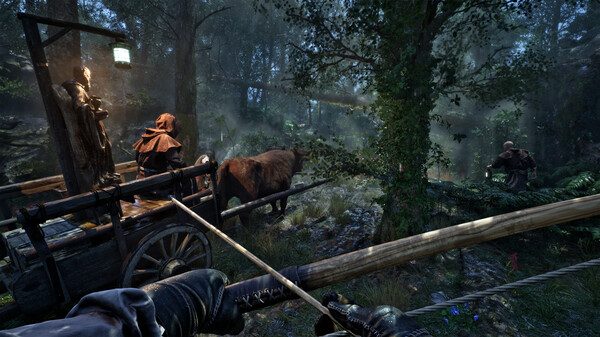
Steel, Shot, and Scrambling Survival
Moment to moment play thrives when exploration, communication, and risk management take center stage. Missions push the group into treasure hunting, objective chasing, and controlled retreat, with noise, time pressure, and dwindling safety turning every run into a balancing act between greed and survival. There is a satisfying sense of learning the jungle over time, especially once the game’s less obvious rules begin to click and the expedition rhythm starts to make sense. That said, combat is clearly the weakest part of the design, with melee feeling clunky, limited, and often more awkward than tense. The lack of defensive options like blocking or parrying makes close encounters feel less deliberate than they should, and while firearms can be punchy and satisfying, the broader combat loop still needs more polish to match the quality of the game’s ideas.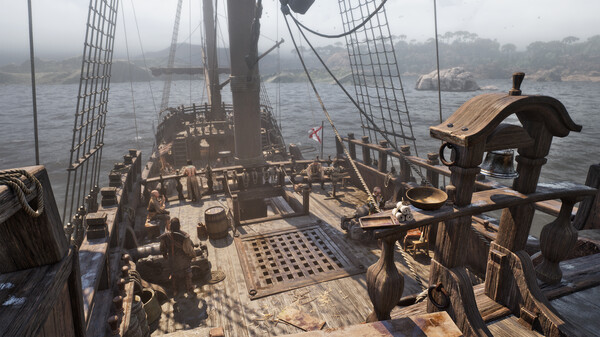
The Cart, the Clock, and the Curse of Friction
Beyond combat, a few support systems create unnecessary friction in a game that already has plenty of intended pressure. The cart companion is a recurring source of frustration, with pathing and responsiveness making it feel less like a valuable lifeline and more like an eldritch HR violation on wheels. Progression can also feel a touch thin, especially when mission structure starts repeating and the reward loop doesn’t always create enough long-term momentum. There is a compelling foundation in the way contracts scale, loadouts vary, and difficulty rises, but the current content cadence leaves the game leaning heavily on emergent co-op chaos to carry replayability. Thankfully, that chaos is often strong enough to do exactly that, though it does make the game feel like it is still growing into its full form.
Whispers, Screams, and Excellent Bad Decisions
Audio is one of the game’s biggest victories. The sound design sells the jungle as a living threat, layering distant shrieks, environmental unease, and reality-bending cues into something that constantly needles at the player’s nerves. Proximity voice chat is especially effective here, not just as a novelty but as a core pillar of immersion, making separation from the group feel genuinely dangerous rather than mildly inconvenient. Hearing a teammate panic somewhere in the dark while you are no longer fully sure what is real is exactly the sort of energy this game is built for. The music and ambient work do a great deal to maintain tension, proving that cosmic horror lands a lot harder when the game knows when to whisper instead of constantly yelling in your face.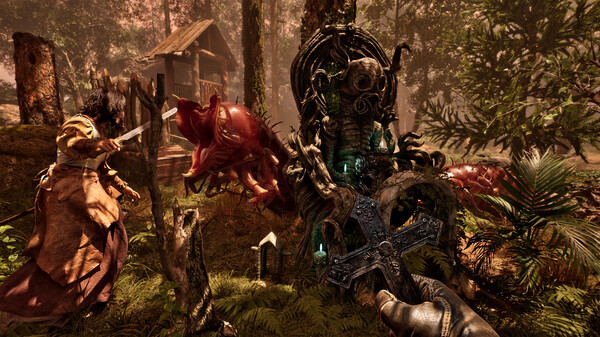
A Beautiful Descent Into Rot
Visually, The Mound is striking. The jungle environments are dense, oppressive, and richly detailed, with strong lighting, unsettling creature design, and a convincing sense of place that helps the expedition fantasy hold together. The game captures that conquistador-meets-cosmic-horror angle with real style, and its visual storytelling often does more for the mood than the more straightforward narrative beats. Performance, however, is a common blemish on that presentation, with reports of uneven optimization, frame drops, crashes, rubberbanding, and occasional visual issues pulling attention away from the atmosphere. Patches appear to have improved things for some setups, which is encouraging, but this is still an area where the game feels less ancient evil and more modern launch habit.
Best Shared With the Doomed
This is very much a game that comes alive in co-op. Solo play is possible, but the real magic is in a full group trying to decipher hallucinations, survive escalating disasters, and avoid accidentally turning each other into collateral damage. The structure is built around communication and shared storytelling, and that means the most memorable moments come not from winning cleanly, but from everything going horribly wrong in the funniest and most terrifying way possible. Even when the systems show their seams, the game is remarkably good at generating stories that players will be repeating long after the session ends. For fans of horror that values atmosphere, confusion, and social chaos over straightforward power fantasy, that is a strong niche to occupy.
STEAM RATING
Developer
ACE Team
Publisher
Nacon
Release Date
July 15, 2026
Verdict and Summary
The Mound: Omen of Cthulhu is an easy game to admire because its core idea is so much stronger than the average co-op horror pitch. Its madness mechanics are smart, immersive, and frequently brilliant, its atmosphere is superb, and its best sessions feel like a mashup of expedition survival, psychological horror, and friends shouting bad information into the void. At the same time, clunky melee, uneven progression, repetitive structure, and ongoing performance issues stop it from feeling fully realized right now. Even so, there is enough craft, personality, and raw potential here to make it worth paying attention to, especially for players with a regular co-op group and a taste for Lovecraftian dread. This is one of those rough-edged games that earns goodwill the old-fashioned way: by being weird, memorable, and just clever enough to make you forgive the part where the cart driver is apparently the true final boss.